

 Bar Fridges
13 products
 Drink & Display Fridges
16 products
 Upright Storage Fridges
8 products
 Underbench & Workbench Fridges
12 products
 Prep Fridges
17 products
 FED-X XR200SG 130L Bar Fridge Glass Door – Commercial Display Bar Fridge
$1,252.90 inc. GST
$1,139.00 ex. GST
View product →
 Upright Storage Freezers
9 products
 Glass Door Display Freezers
4 products
 Chest & Island Freezers
4 products
 Underbench & Workbench Freezers
7 products
 Gelato & Ice Cream Displays
4 products
 FED-X 120L Bar Freezer Glass Door - XF200SG
$1,664.30 inc. GST
$1,513.00 ex. GST
View product →
 Blizzard SN-420P Ice Makers Air-Cooled Cube
$3,732.30 inc. GST
 Blizzard SN-700P Air-Cooled Ice Maker
$4,854.30 inc. GST
 Blizzard SN-1000P Air-Cooled Ice Maker
$5,527.50 inc. GST
 Blizzard SN-120P Underbench Ice Maker Air Cooled
$1,937.10 inc. GST
 Blizzard SN-25C Underbench Bullet Ice Maker 25kg
$1,120.90 inc. GST
 Blizzard SN-80C Professional Ice Maker
$3,358.30 inc. GST
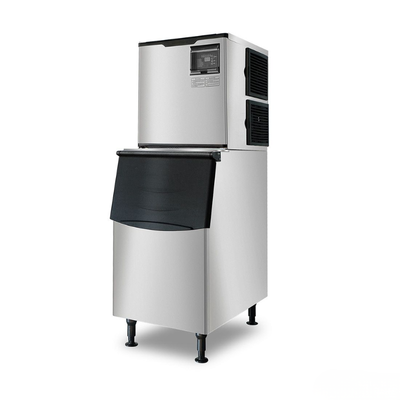 Blizzard SN-420P Ice Makers Air-Cooled Cube – High Output Commercial Ice Machine
$3,732.30 inc. GST
$3,393.00 ex. GST
View product →
 Ovens
17 products
 Convection Ovens
8 products
 Pizza Ovens
6 products
 Gas Ranges & Cooktops
4 products
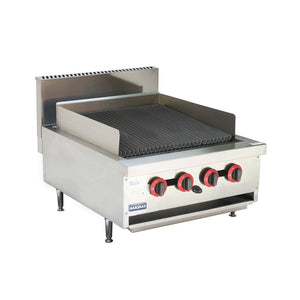 Char Grills
12 products
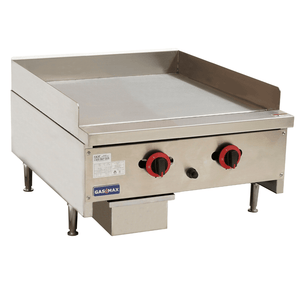 Griddles
13 products
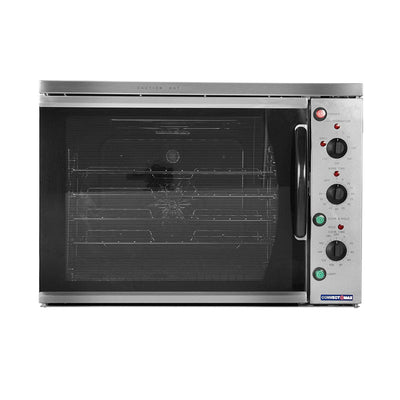 ConvectMax YXD-6A Convection Oven – 4 Tray GN 1/1 Commercial Oven with Grill, 10A
$2,150.50 inc. GST
$1,955.00 ex. GST
View product →
 Cafe
60 products
 Restaurant
101 products
 Bakery
33 products
 Pizzeria
38 products
 Takeaway & Fish and Chips
60 products
 Bar & Pub
29 products
 Butcher & Deli
25 products
 Supermarket & Convenience
22 products
Thermaster
65 products
FED-X
27 products
 Bonvue
15 products
 Fagor
9 products
 Blizzard
10 products
 Gasmax
34 products
 Yasaki
9 products
 Benchstar
5 products

When the dishwasher can't keep up, everything else slows down: plates run out, glasses pile up and staff end up washing by hand. The right commercial dishwasher turns clean ware around fast enough for your busiest service and fits the space and power you have. This guide explains the types and how to choose.
Glasswasher
Best for: bars, pubs and cafés
Compact underbench machines sized for glasses and cups, often with smaller baskets.
Underbench dishwasher
Best for: cafés and smaller restaurants
Front-loading machines that fit under a bench and take full-size baskets of plates.
Pass-through (hood type)
Best for: busy restaurants, clubs and catering kitchens
Baskets slide in one side and out the other as the hood lifts, for fast, high-volume washing.
Underbench machines are the most common choice for cafés, bars and smaller restaurants. They take up no extra floor space and are easy to load at bench height.
Shop underbench dishwashers and glasswashers →
Pass-through dishwashers sit between a dirty-side bench and a clean-side bench. Staff slide a basket in, pull the hood down to start the cycle, then lift it and slide the clean basket out the other side. It's a faster, more ergonomic workflow for kitchens washing a lot of plates, pots and trays.
Shop pass-through dishwashers →
Commercial dishwashers are rated in baskets per hour. That figure is the maximum using the shortest cycle, and real-world output is usually lower once you allow for loading, unloading and longer cycles for heavily soiled ware.
Count your peak
Work out how many baskets of plates, glasses and cutlery you need to clear in your busiest hour.
Allow headroom
Choose a machine rated comfortably above your peak so it isn't running flat out all service.
Check clearance
Measure your tallest plates, trays and pots and make sure they fit under the wash arms.
A glasswasher is set up for glasses and cups, usually with a smaller chamber and baskets. A dishwasher takes full-size baskets and has more clearance for plates. Some underbench models, like the Asber GE-400BDD and Fagor WGT-400BDD, handle both.
Commercial machines heat water in a separate boiler and tank and use powerful wash pumps, so they can run short cycles of one to three minutes instead of an hour or more.
Many underbench models plug into a 15A outlet, but most pass-through dishwashers need 3-phase. Check the power requirement on the product page before you order.
Browse our full range of commercial dishwashers, with delivery Australia-wide. Not sure which suits you? Email us at sales@supplymykitchen.com.au with your busiest-hour volume, power supply and space, and we'll help you choose.


